
The Drawversity figure drawing programme was conceived by Jade Hylton with the aim of introducing more People of Colour to life modelling, to slowly change how People of Colour are represented, and diversify the art we see in galleries and exhibitions. In the UK, the month of September is recognised as East and South East Asian Heritage month. In previous years, Drawversity has researched and shared knowledge on historically prominent figures in the Black community, that have influenced the Art world as models, muses and movers (dancers). For some of history’s most prestigious painters, poets, and stages.
East and South East Asian (ESEA) Heritage Month is an annual celebration held during September to highlight the histories, achievements, and unique identities of East and South East Asian communities. It aims to foster awareness and understanding of their cultural heritage, promoting inclusivity and appreciation among all members of the community. In honour of ESEA Heritage Month, Drawversity has decided to delve into the history of ESEA models, muses and inspirational figures!
Now, it was no small feat, doing historical searching outside of the schooled western history, it can be very challenging! Alongside that, there are so many influential countries that make up East and South East Asia…
East Asia includes China, Hong Kong, Japan, Macau, Mongolia, North Korea, South Korea, and Taiwan.
Southeast Asia comprises Brunei, Cambodia, Indonesia, Laos, Malaysia, Myanmar, Philippines, Singapore, Thailand, Timor-Leste, and Vietnam.
This year Drawversity will be sharing with you the inspiring, and rather audacious, models and muses from China and Japans history.
It has been so educational and inspiring to do this self-assigned research. There are so many other models and muses that I want to share with you, and over time I will.
But what would be really fantastic, is if you could share any inspiring models and muses you might know about or have discovered. Subjects like this can be tricky to do on the internet, and nothing beats a good old fashioned conversation and
exchange of knowledge, so if you know any inspirational figures from the ESEA Art history, get to sharing!
Drawversity is a session that introduces all People of Colour to Life Modelling, but I would like to do a shout out to ESEA Life Drawing ‘A monthly class championing East and South East Asian Bodies’.
Drawversity has had the pleasure of working with this fantastic team – Wing Kei & Kelly – that run classes in different location around London. Be sure to check them out and book a class!
Chinese Models, Muses & Inspirational Figures
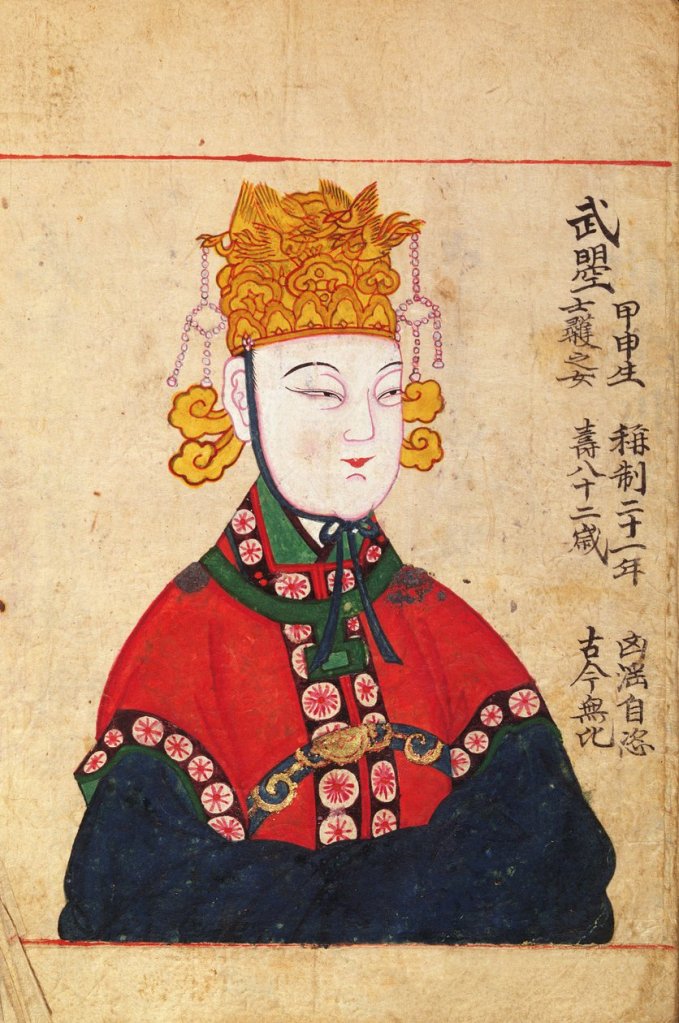
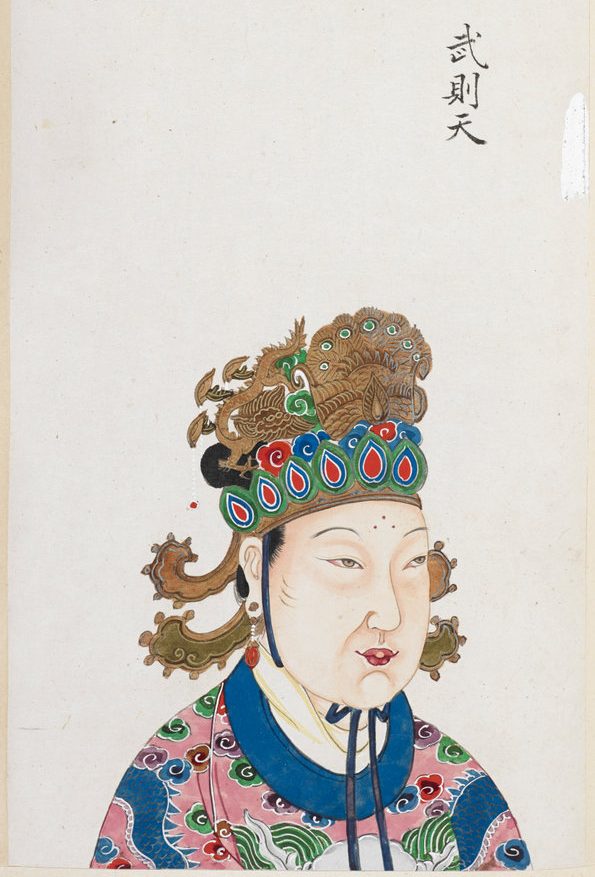
Empress Wu Zetian
Now This Empress may not be a model but she definitely made her mark in history and pathed the way for aspiring heroins in ancient China.
As the only female emperor in Chinese history, Wu Zetian’s ambition, political acumen, and patronage of the arts made her a powerful and influential figure. She inspired countless works of art, literature, and even music, solidifying her place as a symbol of female power and agency. She was a poetess and artist. Little is written in English concerning the artistic life of Wu, for scholars have put much weight on her ambitious political life.
In Wu’s childhood, she had the opportunity to learn history, literature, poetry, and music. During her reign, she formed a group, “Scholars of the Northern Gate,” for the promotion of the associates’ literary pursuits. Both Emperor Gaozong and Wu were fond of literature and poems, and helped create a culture of literary pursuits that flourished in Tang China.
With her exceptional intelligence, extraordinary competence in politics, and inordinate ambition, she ruled as the “Holy and Divine Emperor” of the Second Zhou Dynasty (690–705) for fifteen years.
She remains a controversial figure primarily because of stories about her personal actions against rivals. Male Confucian officials who were deeply prejudiced against strong and ambitious women undoubtedly exaggerated this aspect of Wu’s life in later accounts of her reign.
She had many credited achievements during her reign including:
The first was her policy of recruiting officials. The basic criteria of selection of officialdom shifted from personal integrity or conduct to a greater emphasis on candidates’ education levels and intellectual capabilities. This may have been the reason she avoided any mutiny that threatened her regime.
The second was Wu’s policy of maintaining China’s Imperial sovereignty, expanding Tang territories through conquering several regions, and exercising a dominant cultural influence over Japan and Korea.
The third achievement was Wu’s policy of economic development. Agriculture caught the attention of Wu, who ordered the compilation of farming textbooks, construction of irrigation systems, reduction of taxes, and other agrarian reform measures.
In 695, for example, Wu offered the entire empire a tax-free year. Despite this, her tax office still benefited from trade opportunities through the Silk Roads between China, Central Asia, and the West. Her economic policies apparently improved the life of peasants, moving them toward prosperity and peace.
The fourth achievement was Wu’s patronage of Buddhism. As a child, Wu was introduced to Buddhism by her parents, and, as noted earlier, she was briefly a Buddhist nun. After she gained power, Wu helped spread and consolidate Buddhism and supported the religion by erecting temples so priests could explain Buddhist texts.
The final achievement was Wu’s support of women’s rights. She began a series of campaigns to uplift the position of women. She advised scholars to write and edit biographies of exemplary women to assist in the attainment of her political objectives. Wu asserted that the ideal ruler was one who ruled as a mother does over her children.
COOL FACT: Many Confucian scholars probably viewed Wu’s behaviour as scandalous, immoral, and outrageous. Her gravestone was unmarked by any eulogy; it was deliberately left blank upon her request. She expected people of later periods to evaluate her achievements.
Lady Yu
A concubine of Xiang Yu, a powerful warlord during the late Qin dynasty, Lady Yu is remembered for her loyalty, beauty, and tragic end. Her story has been
depicted in numerous operas, poems, and paintings, making her a symbol of romantic love and devotion.
Lady Yu, also known as Consort Yu or Yu the Beauty, was the wife of Xiang Yu, a prominent warlord during the Chu-Han Contention in ancient China.
She was not just a consort but also a companion who shared in Xiang Yu’s triumphs and defeats. She is depicted as accompanying him on military campaigns and even participating in the drama of the Battle of Gaixia.

At the Battle of Gaixia, the Han army, led by Liu Bang, surrounded Xiang Yu and his forces. To boost morale, they sang songs from Xiang Yu’s native Chu. In despair, Xiang Yu sang a mournful song, and Consort Yu performed a sword dance and then took her own life with Xiang Yu’s sword to prevent him from being burdened by her.

Her story has been immortalised in Chinese opera, literature, and film, particularly in the piece “Farewell My Concubine,” which draws inspiration from her tragic fate. She has even been the inspiration for video game character; Consort Yu in Fate/Grand Order. She is also referred to as Yu Ji, and some artistic depictions show her in armour, suggesting a warrior-like aspect to her character, rather than just a beautiful concubine.
Xi Shi
Xi Shi was one of the Four Beauties of ancient China, known for her beauty and her role in a historical narrative. She is often depicted in art as a symbol of beauty and grace. The phrase “sinking fish, falling geese, eclipsing the moon, shaming flowers” (沈魚落雁、閉月羞花) is ancient Chinese idiom of praise for an unparalleled beauty.

The implication is that a lady is so beautiful that otherwise beautiful parts of nature simply shrink away in the viewer’s mind once she has been seen. You might even imagine colourful coy fish literally diving deep in a pond in shame since they cannot compare, and similarly geese falling from the sky, the envious moon being purposefully eclipsed, and blooming flowers feeling outdone—such is the powerful effect of her beauty.
The lady who had such an amazing power refers to Xi Shi, a beauty of Yue State who voluntarily offered herself to the King of Wu for the sake of her country, ultimately leading to the downfall of Wu State. The 2024 Shen Yun performance
includes a dance drama about Xi Shi, celebrating the kindness and loyalty of this woman.
Although there is no definitive historical record of Xi Shi, her name has appeared in folklore since the pre-Qin Dynasty period (before 221 BC) and is mentioned by thinkers such as Mozi, Mencius, and Zhuangzi. Numerous poems and writings have celebrated her over the centuries.
In this tumultuous period, the powerful state of Wu defeated the state of Yue. The cunning Yue king Goujian feigned submission and served the King of Wu as if he were his own father, while secretly plotting revenge. According to one source, Goujian endured great humiliation, even tasting the king’s excrement to demonstrate loyalty.
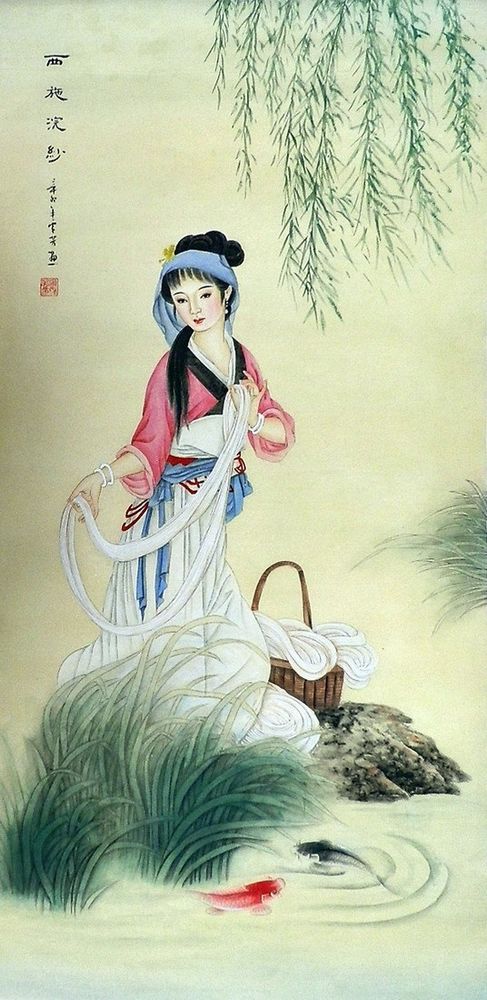
His loyal minister, Fan Li, sought to use the beautiful women of Yue to weaken the King of Wu’s resolve and create an opportunity to avenge their country. This is when they found the renowned silk-washing girl, Xi Shi.
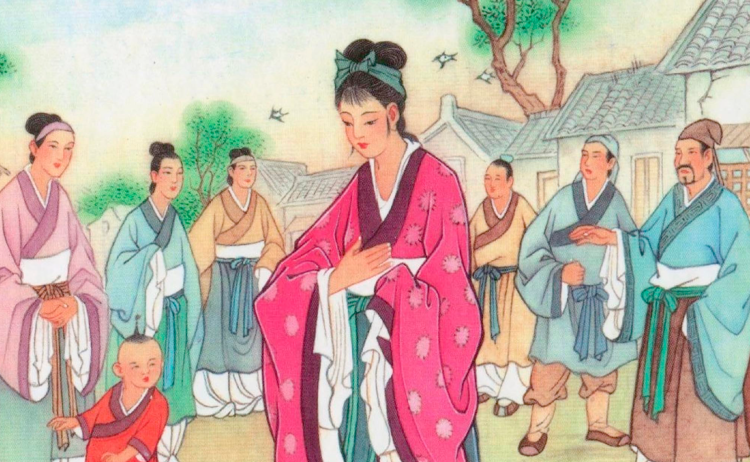
After years of meticulous training in pleasing manners, Xi Shi captivated the King of Wu, Fuchai, successfully. Despite the strong opposition from Wu’s senior minister, Wu Zixu, Fuchai showered Xi Shi with affection, building her palaces on Gusu Terrace and Linyan Mountain. While Fuchai indulged in pleasure and neglected state affairs, Goujian gathered strength and eventually destroyed Wu.
There are legends that after the fall of Wu, Xi Shi either drowned herself, unwilling to leave with Fan Li, or hanged herself in guilt over Fuchai’s love. However, a few sources also say Xi Shi sailed away with Fan Li. Her ultimate fate remains a mystery.
Mozi from the pre-Qin period believed that Xi Shi’s beauty was a curse that brought disaster to herself and Wu. However, later generations defended her. Tang Dynasty poet Cui Daorong wrote, “Official Bo Pi ruined Wu, Xi Shi bore an evil name. The rushing waters where she washed silk seem to voice her grievance.” Poet Luo Yin questioned, “If Xi Shi understood how to overthrow Wu, who else would be to blame if Yue were destroyed?” If the people of Wu blamed Xi Shi for their downfall, who would be blamed if Yue had fallen instead? It is a belief in traditional Eastern civilization (and in Western civilization to a lesser extent) that Heaven has an arranged timing for the rise and fall of nations, and it was beyond the power of a beautiful woman to change fate.
There are similarly multiple layers of meaning to the Chinese idiom “in the eyes of lovers, every woman is a Xi Shi” (情人眼裡出西施).
Like its Western counterpart “beauty is in the eye of the beholder,” this idiom is often thought to mean that beauty is subjective.
However, the context of the original idiom from the Song Dynasty poetry anthology (“After Talks of the Fisherman of Tiaoxi”) adds a more profound meaning. Adding the words before the words that became the idiom, a fuller quote is this: “It is not the appearance that seduces people, but people who seduce themselves. In the eyes of lovers, every woman is a Xi Shi.”
In other words, a beautiful appearance, such as that of Xi Shi, itself is not problematic; the root of seduction, and the disasters it can lead to, lies in a human heart that cannot control itself.
Xi Shi left an indelible mark on Chinese culture not only because of her unparalleled beauty, but more importantly because of her loyalty and willingness to sacrifice for a greater cause. She reminds us that worldly splendour, love, and beauty are meaningless without kindness and righteousness. It is a lesson that has endured through the ages.
Japanese Models, Muses & Inspirational Figures
Moro, Muse of Pixy Liao
“As a woman brought up in China, I used to think I could only love someone who is older and more mature than me, who can be my protector and mentor. Then I met my current boyfriend, Moro.
Since he is 5 years younger than me, I felt that the whole concept of relationships changed, all the way around. I became a person who has more authority & power.
One of my male friends even questioned how I could choose a boyfriend the way a man would choose a girlfriend. And I thought, “Damn right. That’s exactly what I’m doing, & why not!”

“I started to seriously think about the significance of this relationship, and start experiments with photographs. My photos explore the alternative possibilities of heterosexual relationships. Moro made me realize that heterosexual relationships don’t need to be standardized.”

Depending on the individuals, every two people will have a different type of
relationship. Even if the relationship is not the type we are familiar with, it still exists and has its own benefits.
The purpose of this experiment is to break the inherent relationship model and reach a new equilibrium. Over time, the project also reveals my changing
understanding about relationships.


Ota Hisa
a.k.a Hanako ‘little flower’
A Japanese dancer who became a muse for Auguste Rodin, her small stature and exoticism captivated the French sculptor.
As an advocate for women’s education in the Meiji era, she represented the ideal of the “good wife, wise mother” while also championing women’s intellectual equality, making her a muse for those seeking to balance tradition and modernity.

When Rodin met Hanako in 1906, he was 67 and hugely famous.
He had gone to the Marseilles Colonial Exposition to sketch the Cambodian dancers who were performing. There he visited a small hut erected in the woods where a tiny Japanese dancer was performing a shockingly realistic death scene. This was Hanako. Rodin was transfixed. After the performance he gave her his visiting card and told her to look him up in Paris.
At the time Japanese art and artefacts were all the rage across Europe and America and most especially in Paris.
Japonisme, as the craze was dubbed, transformed western visual arts, culture and design and inspired Art Nouveau among much else. The west was gripped by the delicacy and beauty of this mysterious culture.
Rodin too was caught up in the craze, amassing woodblock prints and Japanese art objects to add to his collection of Greek, Roman and Egyptian antiques.
In 1899 the brilliant actress and dancer, Sadayakko, swept across America and Europe, performing at the White House, to sell-out audiences and before the Prince of Wales.
Picasso painted her, Puccini modelled his Madama Butterfly on her, and Rodin asked her to sit for him but she said she had no time. Finally she returned to Japan, leaving the west hungry for another Japanese star – and Hanako fit the bill.

Hanako – ‘Little Flower’ – was not quite what Parisians imagined her to be.
She was born Ota Hisa into a provincial family in central Japan, trained as a geisha, then heard that Japanese dancers were wanted for an exposition in Copenhagen. She arrived there in 1902. She was 34 but at 4 foot 6 inches so tiny that Europeans took her to be much younger.
At first she didn’t find many engagements. But then Loie Fuller spotted her at London’s Savoy Theatre. Fuller, a flamboyant American dancer and impresario, had been the manageress of Sadayakko and of Isadora Duncan.
In her memoir she wrote, Hanako ‘was suddenly able to transform herself with little movements which froze all the anguish of terror into her features. She was pretty, delicate, strange, and stood out even among her fellow countrymen.’ As for her death scene, ‘She was devastating.’
Rodin and Fuller were good friends. Rodin loved sketching dancers and Fuller’s undulating movements and swirling veils were a huge inspiration for him.
At the Marseilles Colonial Exposition, Fuller took him to see Hanako perform. Nothing could deny the ‘flame which illuminated her from within.’ For him it was a new lease of life.
Back in Paris he invited her to lunch at his atelier and asked her to sit for him. He wanted to capture the same expression he’d seen at the Marseilles Expo. In payment he said that he would give her and Fuller each one of his works.
Each morning Fuller took her by car to his atelier. Hanako sat for about half an hour then he took them both to lunch. Sometimes she sat for another half hour in the afternoon, before going to the theatre to perform.

Years later, back in Japan, Hanako reported how difficult it was for her to hold this anguished expression, which was completely opposite to her normal cheerful disposition. From time to time she moved her eyes when they began to ache. ‘Fumbling the clay with his fingers, M. Rodin was very slow in his palette work. If I moved my eyeball a little, he instantly said, “Non, non. Attends, attends.” ’
He also asked her to pose naked, a normal request for him. He liked to capture the play of muscles and ligaments. At first she refused but then Madame Rodin (Marie Rose Beuret, Rodin’s partner for 53 years) begged her too.
He did several paintings of her resting on one leg with the other across it. He told a friend, ‘Hanako is so strong she could stand on one leg as long as she wanted.’
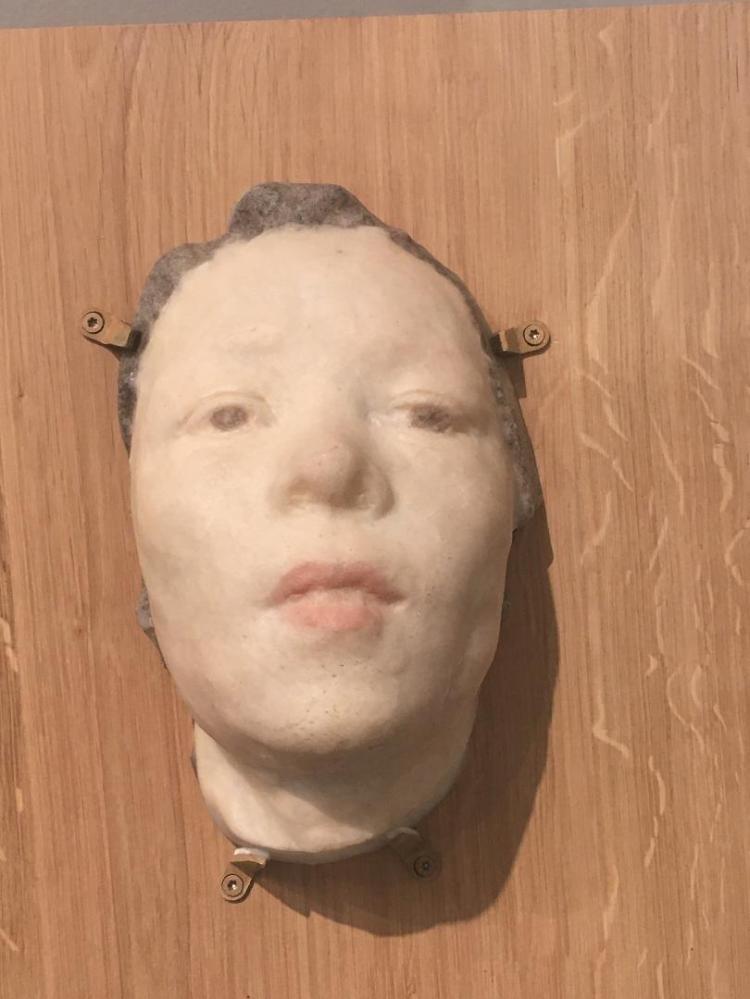
Rodin died in 1917. Hanako visited his tomb the next year at Meudon and wept when his dog wagged its tail when it saw her.
It was only after his death, when she was back in Japan, that she finally got the two busts she had been promised – ‘Head of Death’ and ‘A Meditating Woman’.
Please find all the links that helped source this article below, with additional links to further reading. If you know of any interesting and inspirational figures from ESEA history, please share in the comment section below. Learn more about ESEA Heritage month on the official ESEA Heritage month website. To come to a Drawversity session, head to the Drawversity page.
Bibliography & Further Reading
* Empress Wu Zetian
* Lady Yu
* Xi Shi
* Ota Hisa ‘Hanako’
* Moro and Pixy Liao ‘Experimental Relationship’
* ESEA Life Drawing
* ESEA Heritage Month Official website
* More on Xi Shi
* Top Ten Beauties of China (more on Xi Shi)
* Details on a short Docu-drama about the relationship between Hanako and Rodin, titled ‘Petite Hanako – The Actress Who Captured Rodin’s Heart’
* Lucie Badoul and Tsuguharu Foujita
Related Posts
- ESEA Models & Muses
 This year Drawversity will be sharing with you the inspiring, and rather audacious, Chinese and Japanese models and muses in recognition of ESEA Heritage month.
 - Drawversity, Pride 2025 // The Last Session at Draw Brighton.
 Yep, you read it correctly, we had our last session at the Draw Brighton studio on Saturday 2nd August 2025. Our first home, the setting of Drawversity’s origin story. You’ve probably heard the story hundreds of times, with a well written copied and pasted synopsis paragraph. But I’m going to tell you again, fresh fromContinue reading “Drawversity, Pride 2025 // The Last Session at Draw Brighton.”
 - Drawversity X ESEA Life Drawing Collaboration
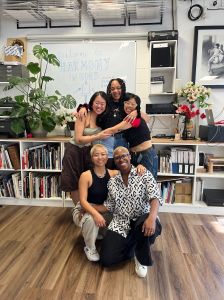 In this one-off event, Drawversity was teamed up with ESEA Life Drawing by the founder of Draw; Jake Spicer. As the creative innovator he is, and knower of all Life Drawing classes in the width and breadth of England, he decided to it would be beneficial for all parties, both professionally and socially to bringContinue reading “Drawversity X ESEA Life Drawing Collaboration”
 Jade Hylton